Since the early 21st century, various social researchers have been creating a new field of study surrounding young adulthood. This impetus stems from the lengthening period between the onset of puberty and the fulfillment of expectations regarding adult roles such as financial independence and family formation.
The psychoanalyst Erikson defined the different life stages and the achievements that needed to be consolidated in each. Intimacy in relationships versus isolation would be what needs to be achieved in this stage and is achieved through interaction with friends, the cultivation of love, and companionship. Each transition between stages generates an emotional impact, and it is not uncommon for intense psychological crises to be triggered upon entering adulthood.
We could narrow this stage to an age range from 18 to 27 years, currently coinciding with what has come to be known as Generation Z. It is a period in which the person enters the workforce and/or university studies. Personal maturation is faced with significant challenges such as consolidating coping skills in the face of frustration, sexual identity, emotional management of relationships with others, with one's own body, and with social reality. In various aspects, current social reality is unsettling and full of uncertainties, which can lead to a negative view of personal and social future.
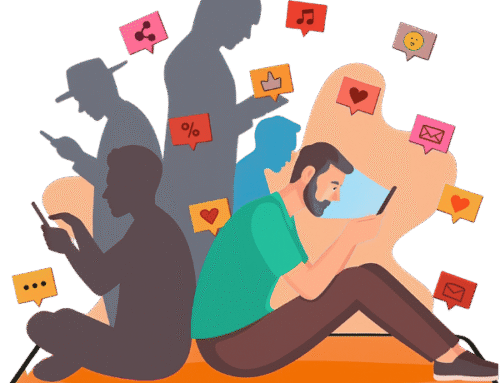
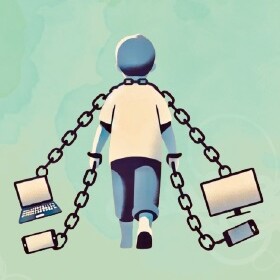
All these factors are currently mediated by immersion in the digital world. Young adults need to more consistently manage their relationship with the digital environment, its potential, and its risks, given that excessive use of digital technology can lead to development of a dependence on certain activities Gambling, viewing pornography, shopping, video games, social media. These are activities that are initially pleasure-generating, and as the subject increases the time and intensity with which they engage in the activity, it ceases to be a form of entertainment and becomes a compulsive need.
The problematic or addictive use of digital technologies can significantly alter mood, family, romantic, and friendship relationships, academic or work performance, or even personal finances. This is not a minor issue, given that ease of online access has led to a significant increase in the prevalence of technology-related problems (Blasco et al. 2022) in adolescence and beyond.
On this day, we reflected on the conditions and proposals for taking care of mental health and promoting emotional well-being. The Conference was divided into three sections:
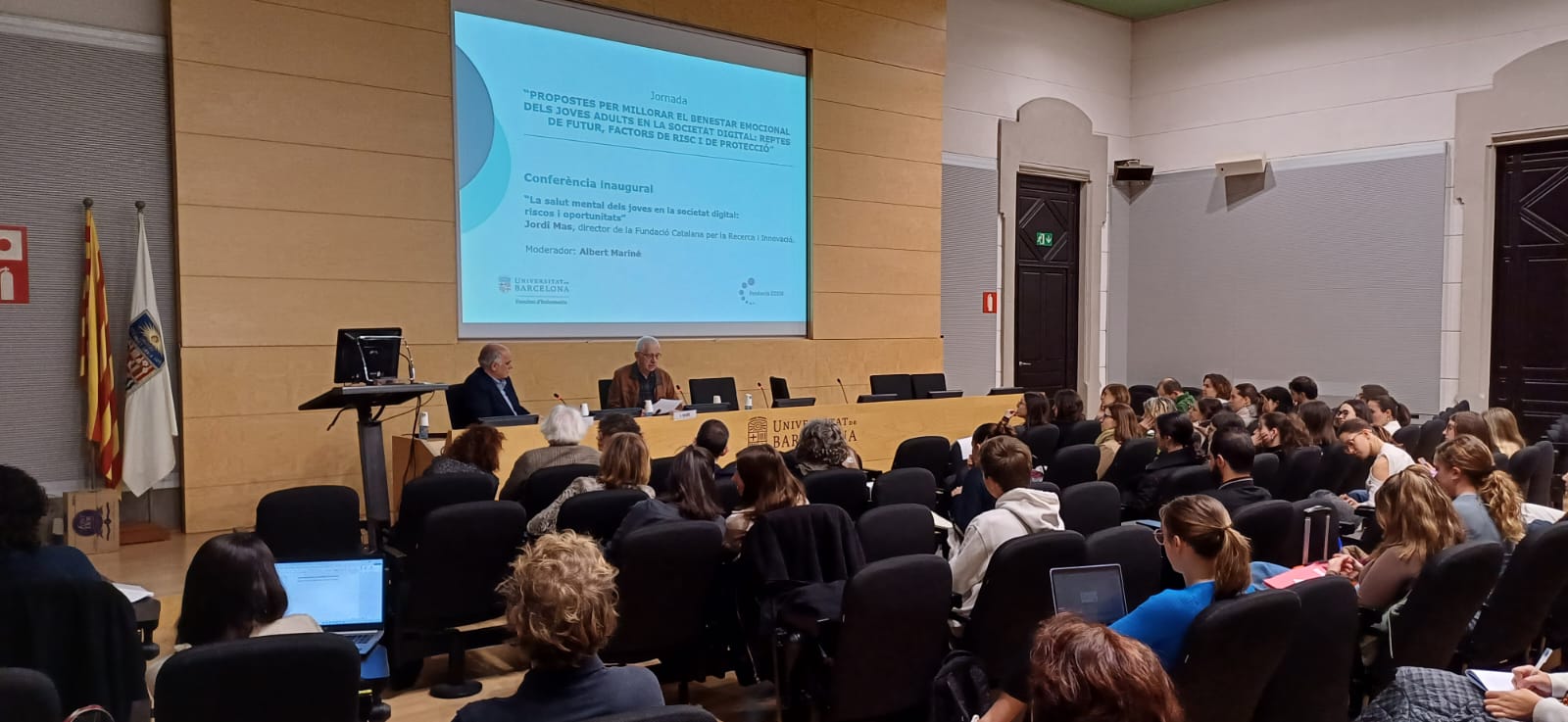
Conference
Jordi Mas He presented himself as someone who is not an expert in the topic of mental health and digitalization. From his extensive knowledge in scientific research and management, he brought the information he had researched for the conference, breaking down very interesting data and a series of fundamental concepts. He emphasized that in such uncertain times as the present, where much falsehood circulates, rigor in the presentation of data is necessary. However, absolute certainties must be avoided, and it must be admitted that science accepts doubt and is based on critical thinking.
Jordi Mas's presentation was divided into different sections: The brain, the still unknown organ. The irruption of digital technology into our lives. The impact of technology on mental health: do we have all the certainties? Causality and correlation. Youth and mental health. Risks and opportunities. Artificial intelligence and mental health.
With the final summary, he proposed the following concepts:
1. Faced with a complex world, we need multidisciplinary approaches.
2. Digital technology depends on the data we feed it., which can be of higher or lower quality. Spurious correlations must be avoided, and science must be conducted with rigor.
3. The The patient must be at the center of the healthcare system. encourage their participation and co-creation of responses.
TABLE 1: THE VIEWPOINT OF YOUNG PEOPLE
In this panel, there were three presentations made from diverse and complementary experiences and visions, which allowed for a broad overview. Nacho Roura He presents himself as a science communicator on social media specializing in neuroscience and mental health, unaffiliated with any institution. The difference between him and an influencer is that he doesn't seek financial gain from his posts. He tries to debunk false and trivial myths, and aims to spark interest so that people seek out reliable sources of information. His goal is not to trivialize problems, avoid self-diagnoses, pathologizing, or attributing individual distress through a biomedical lens. It's not easy to be a science communicator for young people given the immediacy that prevails on social media, but he believes it's possible to do so with rigor and by trying to help people.
Judit Solans She offers her life experience, partly linked to social media and her role as a content creator. She doesn't shy away from admitting she's been through difficult times and that social media can be toxic and harmful, especially for those who compare themselves negatively to those who brag. It happened to her, but with help, she became aware and managed to change her perspective. She has created a digital space where she speaks naturally and honestly about personal experiences. She offers an open, non-institutional space for meeting and mutual support that is healing.
Lucía Aliagas As a member of Joves de CCOO, she defends that psychological problems often stem from discomfort related to various deficiencies, especially precarious labor and housing situations. The reality of work for young people is often adverse regarding salaries, temporary contracts, demands for full availability, and inadequate relationships. The union's perspective highlights these situations and strives for improvement. Reaching young people is largely done through social networks and the internet. It is important to raise awareness of social rights on social networks and offer collective psychological support.
TABLE 2 CONTRIBUTIONS FROM STUDY AND RESEARCH
José Ramón Ubieto It starts from the observation that we live in a time of social emergency in which partial, hasty responses are offered without pausing to consider which questions we need to answer. Protocols and labels are constantly sought to plug the mysteries and complexities of life. Young people often have fleeting feelings of identity. There is a lack of genuine critical thinking. The added problem is that uncertainty about the present and the future has already lasted a long time, and fear is growing along with violent and xenophobic reactions. 25 percent of young people, mostly men, are in the bubble of extremism and are rabidly antifeminist, and this is spreading through social media. We are in the age of excess, of frenzy, of the "hyper." On the other hand, mobile phone overuse has a lot to do with socioeconomic conditions among children and adolescents. If minors don't have access to extracurricular activities, they stay at home alone with their phones connected.
Rose Calvo It presented various data on the use and abuse of digital devices, emphasizing the need to set limits based on age groups. Adults are not sufficiently aware of their excessive use and how it influences their children. Strategies to control compulsive use should be considered and agreed upon within the family. The potential harm regarding the increase in pathologies and even suicides in people with very long connection times must be taken into account. The College of Physicians has published a guide on Digital Protection of Children and Adolescents with recommendations for administrations, developers, and families.
Gemma Mestre Drawing on her experience as a researcher in behavioral addictions, she discusses the phenomenon of pornography, which is not clearly defined or delineated. In adolescents, factors such as curiosity, peer pressure, the pursuit of pleasure, the exploration of sexual preferences, and emotional regulation are determining. In children, it often stems from accidental discoveries and needs to be monitored by
Legal authority on platforms. Pornography has addictive potential in certain individuals with traits similar to other addictions. It can distort a person's normal activity, become obsessive, and cause significant depressive feelings. It does not have a specific entity and is included within sex addiction. Pornography is readily available on the internet and could contribute to the establishment of aggressive patterns in sexual relationships.
After the interventions, a very lively and enriching debate ensued, during which the attendees made various very interesting contributions.
Organizing Committee
Observatory on Digital Society and Mental Health (FCCSM), Mental Health Nursing, Faculty of Nursing (UB), Amparo del Pino, Albert Mariné, Eduardo Valenciano and Anna Palau
Organizing Committee
Observatory on Digital Society and Mental Health (FCCSM), Mental Health Nursing, Faculty of Nursing (UB), Amparo del Pino, Albert Mariné, Eduardo Valenciano and Anna Palau
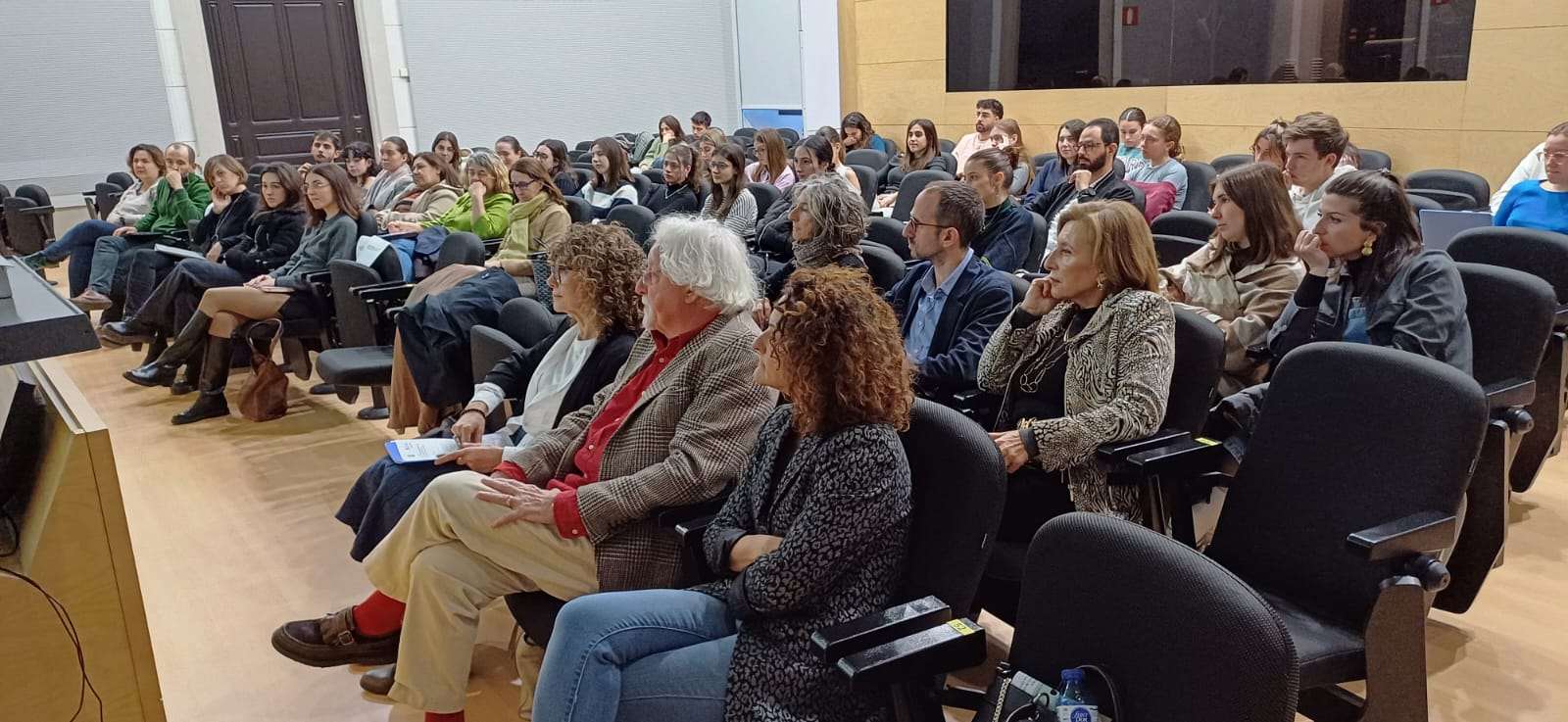
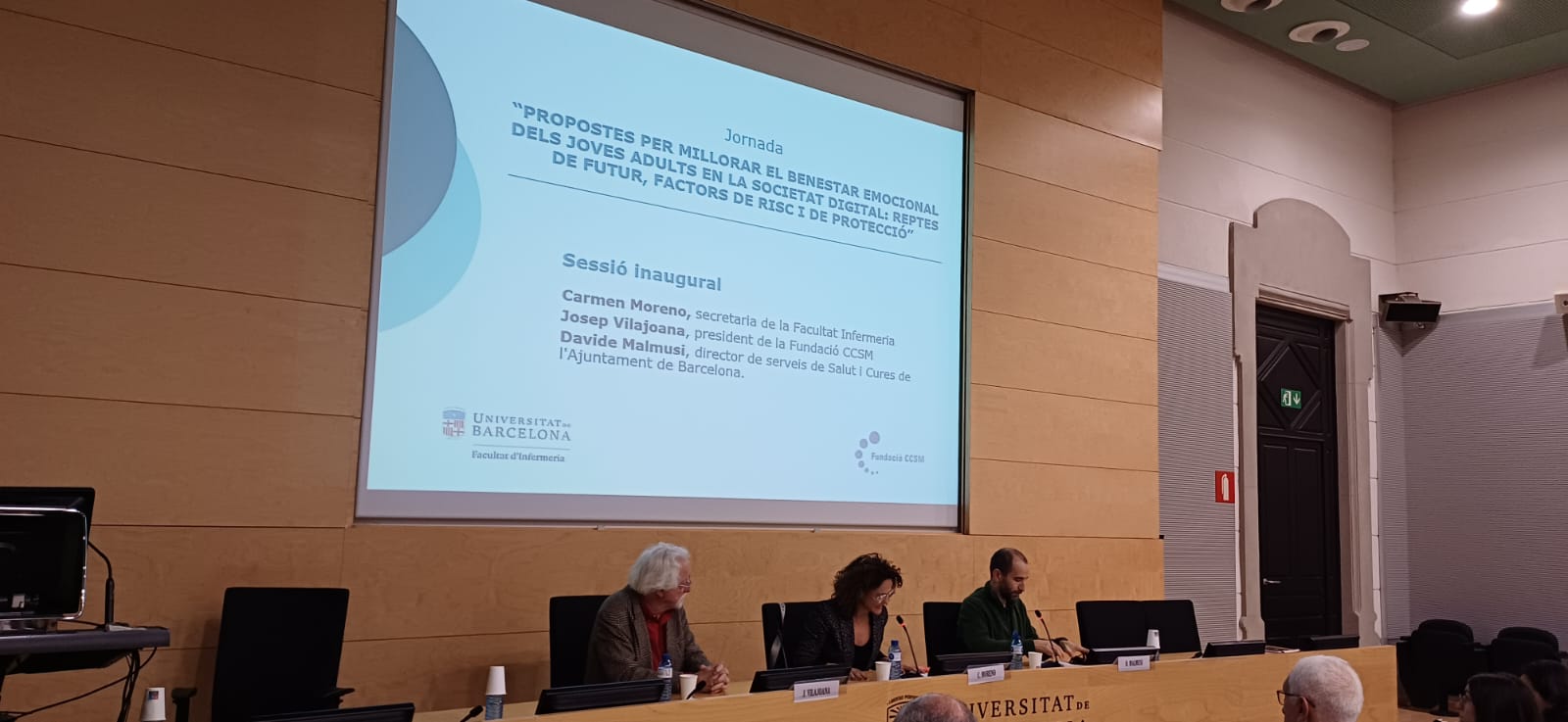
Images from the day
In collaboration with:






With support