
Adding to our 20th-anniversary celebration is an event that will mark this year, 2020, and likely many more years, with emotions tinged with pain, perplexity, fear, sadness, and ultimately the deepest sense of fragility: the Covid-19 pandemic.
I recall that months before the Foundation's establishment (September 14, 2000), an event on war was held (July 2, 1999), focusing on Sarajevo, a city that, for most European citizens, and especially for Barcelonians, suddenly found itself in a war of terribly destructive dimensions.
The wars in Palestine, and in general in the East, in the Balkans, in Afghanistan are present in the 20th century and filter, in one way or another, into this 21st century.
However, at the very end of 2019, in China, in a specific city with almost 15 million inhabitants, a threat that public health scientists had already warned about erupted: the coronavirus Covid-19.
Two months later, approximately, the threat becomes an epidemiological phenomenon, and a macabre count of thousands of infected and hundreds of deaths begins.
Fragility and death take center stage, and governments worldwide are implementing measures in various ways to confront them.
And here I want to go back to our 20th anniversary.
If we understand mental health broadly, and the entity as a whole seems to understand it that way, we know that wars, violence against women, hunger, poverty, forced migration, everything that represents injustice, unhappiness, and ultimately evil has devastating consequences on the mental health of individuals and groups.
It is not the only cause of distress, but its dimensions often exceed those caused by other, also very relevant, situations such as workplace harassment, evictions, and many others that we know about daily in any latitude.
I've known the Foundation since its beginnings, although I haven't always been directly involved in its many activities, aside from the successive congresses, which are revisited in this very document. And this is done precisely by seeking to understand its social impact on health and well-being, through the different major themes studied and debated interdisciplinarily.
It's a balance of the effects, the results, of the impromptu that the debate and proposals from so many professionals produce, or not, in society and its political leaders, especially in relation to mental health.
After these twenty years of work, we can continue to affirm that people's living conditions, their neighborhood, their housing, their working conditions, their education, their family structure, in short, their life landscape is a very strong indicator for their mental health..
During these twenty years, various people, some of whom are no longer with us, have carried forward the Foundation's vision wherever it has been possible to reach, and at times, a little beyond. Therefore, I want to share two points to conclude this presentation:
The first, my Thanks for your effort, which has allowed us to be here today.
The second one, my desire to become which for me is an unquestionable honor, to preside over the Foundation, tangible results that consolidate its role in the field of mental health, in close relation with those areas that share in the influence on the health, broadly considered, of people.

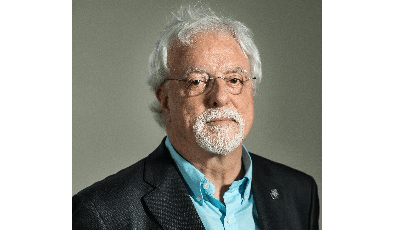
Dr. Josep Vilajoana i Celaya
President of the Catalan Congress of Mental Health Foundation
Barcelona, May 2020